Music
Our vision for music
Music enables children to listen attentively, sing, play, improvise, compose and perform. They develop confidence and learn to appreciate a range of styles.
What children learn
Year A (2026–27) is being taught now. Year B (2027–28) follows next year. Years 1–2 use Charanga Year 1 projects, Years 3–4 use Year 4 projects and Years 5–6 use Year 6 projects. Individual year-group expectations remain important.
Cycle and phase |
Autumn |
Spring |
Summer |
Year A · Years 1–2 |
My Musical Heartbeat; Dance Sing and Play |
Exploring Sounds; Learning to Listen |
Having fun Improvisation; Let’s Perform Together |
Year A · Years 3–4 |
Writing Music Down; Playing in a Band |
Compose Using Your Imagination; More Musical Styles |
Enjoying Improvisation; Opening Night |
Year A · Years 5–6 |
Melody and Harmony in Music; Sing and Play in Different Styles |
Composing and Chords; Enjoying Musical Styles |
Freedom to improvise; Battle of the Bands! |
Year B · Years 1–2 |
Pulse, Rhythm and Pitch; Playing in an Orchestra |
Inventing a Musical Story; Recognising Different Sounds |
Exploring Improvisation; Our Big Concert |
Year B · Years 3–4 |
Musical Structures; Exploring Feelings When You Play |
Compose With Your Friends; Feelings Through Music |
Expression and Innovation; The Show Must Go On! |
Year B · Years 5–6 |
Music and Technology; Sing and Play in Different Styles |
Composing and Chords; Enjoying Musical Styles |
Freedom to Improvise; Battle of the Bands |
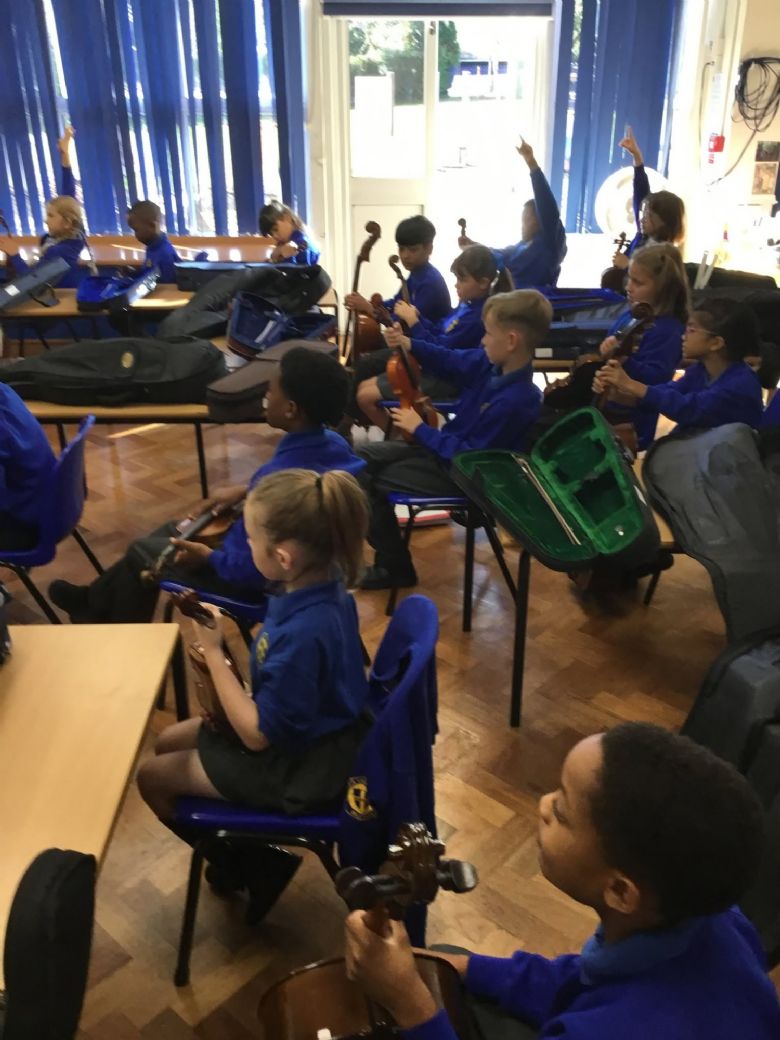
Key Stage 2 have weekly hymn practice. Year 4 learn strings as part of the First Access music programme.
Essential Knowledge and progression
Reception children explore sounds, song and movement. Across the phases pupils revisit pulse, rhythm, pitch, structure, performing and composing, using more demanding musical ideas as they progress.
A learning journey: In Years 1–2, children keep a pulse, recognise a change in rhythm and reproduce a simple pattern in My Musical Heartbeat. In Years 3–4, Writing Music Down helps them represent, read and refine musical ideas. In Years 5–6, Melody and Harmony in Music and Composing and Chords ask pupils to combine musical elements with greater intention. Children move from echoing and exploring sounds to explaining choices, composing and performing with increasing control.
How we teach it
Children learn by listening, singing, playing, composing and talking about the choices they make. Musical vocabulary helps them describe what they hear and create.
DISCERN in this subject: Pupils recall and echo a rhythm, listen to a model of a new musical pattern and rehearse it with support. They compare ideas with others and listen for accurate pulse and pitch. An independent performance or short composition shows what they can do; reflection identifies the next skill to practise.
How all children take part
Teachers introduce and revisit key vocabulary, model new ideas clearly and adapt resources and support so that every child can participate and show understanding. Children who are ready to go further can explain, compare, apply and question their learning.
How we check learning
Teachers check understanding through questions, discussion, pupil work and practical activity. They revisit essential knowledge, address misconceptions and use what they learn about pupils to plan the next steps.
The school’s Marking and Feedback Policy also applies here. Evidence may be spoken, practical, digital or written: a brief observation, question, performance, product or recorded response can show the Essential Knowledge. Feedback identifies the next useful step and informs what the teacher revisits.
Beyond the classroom
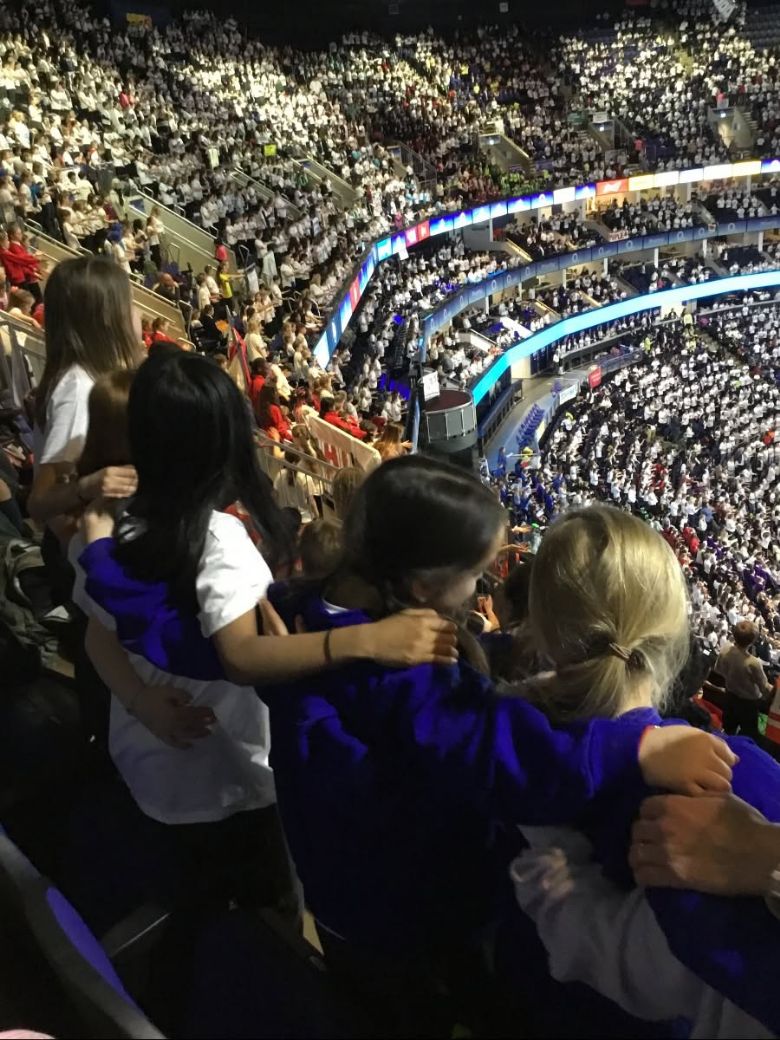
Singing together, assemblies, liturgy and performances offer ways for pupils to experience music as part of community life. Choir is available throughout the year in the club programme, giving interested children an additional opportunity to sing with others and at Young Voices in Birmingham and the Big Sing at Dorchester Abbey. The choir also sings at local care homes and public events throughout the year. The school heavily promotes peripatetic music lessons and a significant number of pupils learn an instrument. Year 6 take part in a MAC wide music concert at Oxford Town Hall.
|
|
|
Curriculum documents and further information